October 18, 2026
·
10 min read
Free Live Chat Software vs Open-Source Chat: Which Meets Compliance Needs?
Compare free live chat software vs self-hosted open-source chat for GDPR/HIPAA: data buckets, DPA/BAA, audit logs and retention.

You’re adding a chat bubble to your site, and someone on your side (or a customer) says you “need to be compliant.” Now a simple widget choice turns into questions about what data will show up in chat, who can access transcripts, how long you keep them, and whether you can pass a security review.
This comparison breaks the decision down by risk and requirements: what counts as low-risk PII vs special-category data vs PHI/ePHI, what compliance demands in practice (DPA/SCCs or a BAA, security evidence, audit logs and retention controls), and a rubric to pick the lowest-effort option that can actually clear the bar.
Classify chat data
Before you compare free live chat software vs open-source chat, get brutally specific about what will show up in the chat box (and in file uploads). Compliance obligations trigger on data types and how you handle them, not on whether the widget costs $0.
Low-risk PII
Personally identifiable information (PII) is anything that can identify a person, directly or indirectly. In live chat that usually means names, emails, phone numbers, account IDs, order numbers, and “can you help me log in?” messages.
This is your low compliance bucket: you’re still handling regulated personal data. In this bucket, the work is making chat behave like a controlled support channel instead of an informal data store—control who can read/export transcripts, set a deletion schedule, and make sure attachments aren’t being stored somewhere you didn’t expect.
Special-category data
Special-category data is “sensitive by nature” personal data—things like health details, biometric identifiers, or political opinions. In chat, it often arrives accidentally: a user explains symptoms, uploads a photo, or shares disability/accessibility needs.
This is your medium compliance bucket because it increases the stakes even if you’re not a healthcare provider. If your product or audience makes this likely, treat chat like a sensitive intake channel: assume messages and attachments will contain more than “support info,” and evaluate tools on whether they can enforce stricter access and retention expectations.
PHI and ePHI
PHI (Protected Health Information) is health information linked to an identifiable person; ePHI is PHI in electronic form, which triggers HIPAA Security Rule requirements.
This is your high compliance bucket. The moment patients can share diagnoses, treatment details, lab results, insurance info tied to care, or medical images through chat, your “nice-to-haves” become non-negotiables.
Also watch the inbox channel. Telegram, for example, has end-to-end encryption only in Secret Chats, and the official Telegram Bot API doesn’t support Secret Chats—so a bot-routed chat workflow can’t rely on that E2EE mode for sensitive content.
If you can’t confidently say which bucket you’re in, assume you’re one bucket higher—then test tools against the contract, evidence, and operational requirements that bucket will trigger in review.
What “compliance” requires
“Be compliant” isn’t a feature checkbox on free live chat software. It’s proof you can contractually control the data flow, produce security evidence on demand, and operate the system day-to-day without losing track of who accessed what.
Contracts layer
These are the documents that turn “we use a chat vendor” into enforceable obligations.
- Know your role: under GDPR, a controller vs processor relationship means you (controller) decide why/how personal data is processed, and the vendor (processor) processes it on your behalf under contract.
- DPA: a Data Processing Agreement (DPA) is the contract required under GDPR Article 28 when a controller uses a processor to handle personal data; Article 28(3) spells out what that contract must cover (scope, purpose, data types, categories of people, and more).
- SCCs: Standard Contractual Clauses (SCCs) are standard contract terms commonly used to support cross-border personal-data transfers under GDPR; if chat data crosses borders, this is where legal review usually lands.
- BAA: a Business Associate Agreement (BAA) is a HIPAA-required contract that sets obligations when a vendor handles PHI/ePHI on behalf of a covered entity or business associate; HHS is explicit that covered entities must have written contracts/arrangements with business associates to protect PHI. Some vendors also draw a hard operational line here—for example, Intercom states that without a signed BAA, transmitting ePHI through Intercom is strictly prohibited.
Security evidence
This is what you hand to a security reviewer when they ask, “How do we know you actually run the controls you claim?”
- Independent assurance reports: expect requests for SOC 2 Type II and/or ISO/IEC 27001 evidence (Intercom, for instance, states it is SOC 2 Type II compliant and ISO 27001 certified).
- Data-flow transparency: a current subprocessor list (who else touches chat data—hosting, storage, analytics, etc.).
- Incident response posture: a clear incident response process (who investigates, timelines, customer notification path) that you can point to in writing.
Operational controls
These are the controls you’ll rely on after you’ve signed the paperwork.
- Access governance: least-privilege access to transcripts, attachments, and admin settings; remove access when roles change.
- Audit log: an audit log is a record of access and actions (who viewed/exported/deleted transcripts, config changes) used for security investigations and compliance evidence; if you can’t reconstruct an event, you can’t credibly investigate it.
- Retention policy: a retention policy is rules for how long chat transcripts and attachments are kept and how/when they are deleted; some platforms explicitly market granular retention controls.
- Data residency: data residency is a requirement that data be stored/processed in a specific country/region (often contractual), not just “encrypted”; if residency is non-negotiable, self-hosting options are sometimes positioned as the way to meet strict residency requirements.
- Resilience as a requirement: GDPR Article 32 frames security as maintaining appropriate measures, including the ongoing confidentiality, integrity, availability, and resilience of processing systems and services.
If a tool can’t give you the contract artifacts and you can’t operate the controls, “compliant” is just a label you can’t defend in review.

Model trade-offs
Free hosted live chat software and open-source self-hosted chat fail compliance in different places—and it’s rarely about whether the widget has “encryption” in a feature list.
With a hosted widget, the structurally hard part is contracts and evidence. Your chat data lives on someone else’s systems, so you only get the paperwork and assurance they’re willing to provide. In practice, this is why security reviews fixate on things like SOC 2 Type II and ISO/IEC 27001; for example, Intercom publicly states SOC 2 Type II compliance and ISO 27001 certification, and it also references ISO/IEC 27701, ISO/IEC 27018, ISO/IEC 42001, and AIUC-1 for its AI agent. Operationally, hosted tools can also come with explicit service commitments—Intercom lists a 99.8% uptime SLA—which is hard to match if you’re running everything yourself.
Hosted chat also tempts teams into magical thinking about HIPAA. The HIPAA conduit exception is a narrow carve-out for transmission-only providers with only temporary storage incident to transmission; HHS is explicit that a cloud provider that maintains ePHI for processing and/or storage is still a business associate. “No-view” encryption doesn’t automatically save you either: HHS also says a provider that stores only encrypted ePHI (and doesn’t have the decryption key) can still be a business associate.
Open-source/self-hosted flips that: contracts get simpler because you control the system, but operations become the compliance burden. You inherit hard requirements like maintaining security and resilience (GDPR Article 32), plus the ongoing work of patching, access governance, retention enforcement, and auditability.
Encryption debates sit on top of these trade-offs, not instead of them. E2EE (end-to-end encryption, where only the endpoints hold the keys to decrypt message content) isn’t a universal property of “chat”: Telegram’s MTProto, for instance, has both client-server encryption (cloud chats) and E2EE (Secret Chats). Under HIPAA, encryption is also treated as an “addressable” specification—you must assess and implement it if reasonable, or document an alternative.
If you’re looking for AI that’s “totally free,” treat that as a billing claim, not a compliance plan. Even mainstream add-ons are explicitly metered: Intercom lists a $0.99 USD price per Fin AI Agent outcome.
A concrete middle ground exists, but it still isn’t “set and forget.” Tools like Rocket.Chat route website Livechat widget conversations into a workspace via Omnichannel, and Rocket.Chat’s plan documentation states it supports HIPAA with a Business Associate Agreement available (alongside GDPR controls and granular retention policies). On the hosted side, some vendors expose privacy controls that change data collection behavior; Crisp, for example, describes settings to defer initializing a user session until the visitor interacts with the chatbox.
Decision rubric: pick the lowest-effort option that can still pass review
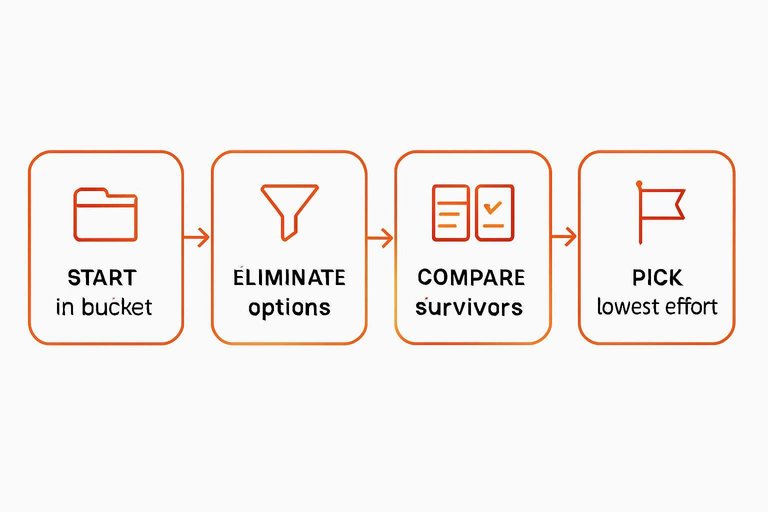
Use this as a set of stopping rules. Start in your data bucket, eliminate anything that can’t clear the first non‑negotiable, then only compare the survivors on UX and cost.
| Compliance bucket | Stop here (eliminate options) | Lowest-effort path that can pass | Good starting points to evaluate |
|---|---|---|---|
| Low: low-risk PII only (names/emails/order IDs) | Any reviewer requires formal assurance pack (SOC 2/ISO); you can’t control transcript access/exports; you can’t set and follow a deletion schedule | Lightweight hosted chat with strict data minimization (no attachments, short retention, tight admin access) | tawk.to (widget typically ~300 KB even with all features enabled); Eloqra (free while in early access — no credit card to start) |
| Medium: special-category data is likely (sensitive by nature) | You can’t produce a vendor DPA + current subprocessor list; you can’t support audit logging and stricter retention; you can’t reliably prevent/contain file uploads | Pay for a SaaS tier built for reviews, or self-host only if you can run security ops (patching, backups, access reviews) continuously | Chatwoot (open-source/self-host path when you need infrastructure control) |
| High: PHI/ePHI can appear (HIPAA territory) | You need a BAA and the vendor won’t sign one; you can’t evidence security operations and incident response; you can’t commit to where data is stored/processed | Either (1) pay for a HIPAA-ready SaaS plan with the required contracts and evidence, or (2) keep PHI out of chat entirely and route patients to a controlled intake channel | Budget reality check: LiveChat.com shows a $19 USD per user/month starting price (billed annually) |
If you’re trying to answer “best free live chat software” in compliance terms, the only defensible “best” is the one that stays inside the low-risk bucket by design: collect the minimum, store the minimum, and make access boringly controlled.
If your org is facing a real security or HIPAA review, “best live chat support software” usually stops being about which widget is nicest and becomes: which option will actually sign the contracts you need and hand you the evidence on request. At that point, the lowest-effort path is almost never a free tier.
Don’t create liability
-
Rewrite the chat prompt so users self-filter. Put the warning inside the widget: “Don’t share payment card numbers or health information here. For account/payment changes, use this form.” Make the default path the safe path.
-
Keep regulated data out by design, not policy. Default to disabling file uploads; only enable them when you can control where attachments are stored, who can access them, and how long they’re retained. Add server-side redaction for PCI (Payment Card Industry card-data rules): strip patterns that look like card numbers/CVV before anything is stored or forwarded.
-
Lock down transcript access and exports. Give the smallest set of people access to transcripts, attachments, and admin settings. Avoid shared logins; make “export transcripts” a privileged action.
-
Set retention on day one. Decide how long transcripts and attachments are kept, then configure auto-deletion to match. “Indefinite history” is how low-risk chat becomes a permanent data store.
-
Prepare for deletion/export requests—and practice once. Write a runbook: verify the requester, export their transcripts, delete them, and record what you did. If you self-host, treat that as taking ownership of the compliance work: you still have to harden and patch the system, vet updates, document the controls you run, and account for the other processors you still rely on (for example hosting, object storage, and messaging/notification services) under GDPR Article 32.
Pick the model your review needs
Treat “we need to be compliant” as a scoping question, not a pricing or licensing debate: once you know whether chat will contain low-risk PII, special-category data, or PHI/ePHI, the viable options narrow fast. If you can’t get the contracts and evidence your reviewer will ask for (DPA/SCCs or a BAA, assurance reports, subprocessor transparency), a free hosted tier won’t become compliant by wishful thinking—and if you can’t run patching, access governance, retention, and auditability continuously, self-hosting won’t save you either. Your first move is to decide which data bucket you’re in, then eliminate anything that fails the first non-negotiable (BAA, audit logs/retention controls, or data residency) before you look at UX and cost. Lightweight chat routed to a simple inbox can be the lowest-effort answer only when you keep the widget firmly in the low-risk bucket by design; once sensitive or healthcare data can show up, the lowest-effort path is paying for the contracts and controls—or keeping that data out of chat entirely.
Frequently Asked Questions
- Is open-source live chat automatically more GDPR-compliant than free live chat software?
- Not automatically—self-hosting removes a SaaS vendor from the chain, but you still have to implement and prove security and resilience controls (GDPR Article 32), plus manage every other processor you rely on (hosting, storage, email, etc.). If you can’t run patching, access reviews, backups, and auditability continuously, self-hosting can create more compliance risk, not less.
- Can a Telegram-based “free live chat software” workflow be end-to-end encrypted?
- Not through the Telegram Bot API, because Secret Chats (Telegram’s end-to-end encrypted mode) aren’t supported for bots. If your website chat routes messages via a bot, treat it as a non‑E2EE path for sensitive content.
- Does “encrypted chat” mean I don’t need a BAA for HIPAA?
- No—HIPAA can still treat a cloud provider as a business associate even if it only stores encrypted ePHI and doesn’t have the decryption key. If PHI/ePHI can show up in chat, you need the right contract posture (including a BAA where required), not just an encryption checkbox.
- What’s the fastest way to make free live chat software safer from a compliance review perspective?
- Start by preventing regulated data from entering chat: add an in-widget warning (“don’t share card numbers or health info”), disable file uploads, and set short transcript retention with restricted export permissions. Then document who can access transcripts and how deletion/export requests are handled so you can show a repeatable process in review.
- What is the best free live chat app for a solo founder who wants a lightweight widget and minimal ops?
- Pick a free live chat software option that keeps your data scope intentionally small (no attachments, minimal identity fields) and doesn’t require you to operate servers just to run chat. Eloqra is built for this “keep it simple” setup and states 99.98% 30‑day uptime on its homepage.
Keep chat in the low-risk bucket
Once you’ve scoped what can show up in chat, the next step is choosing a setup that stays lightweight without adding new governance overhead.
Eloqra adds a live chat bubble that routes every visitor message to your Telegram, so you can respond fast without a separate support dashboard. Start with the Free Forever plan while you validate your workflow.
Written by
Eloqra
Notes from the Eloqra team on collecting testimonials and building authentic social proof.
Share: